Calculator
SV EN
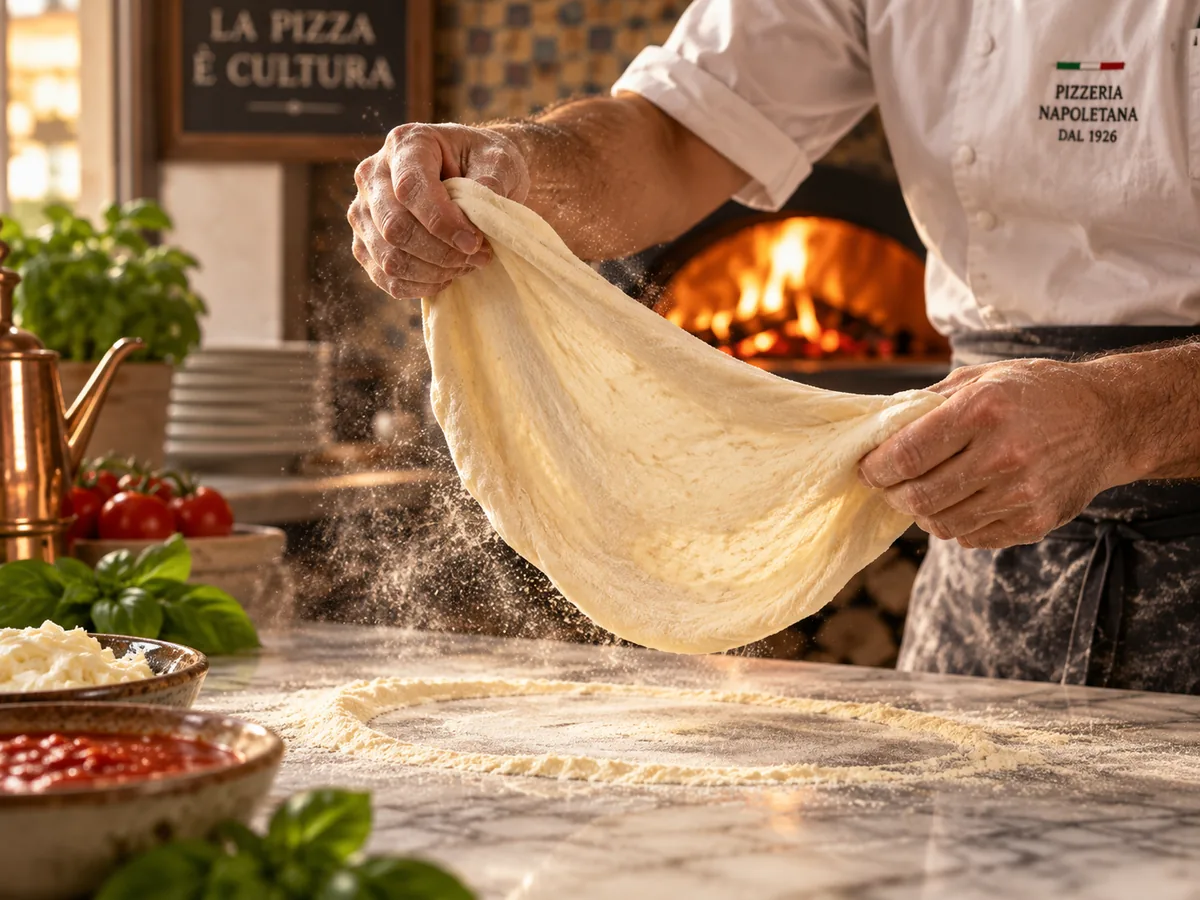
A pizzaiolo lifts a freshly baked Neapolitan pizza out of a wood-fired outdoor oven at dusk.

Serious home pizza

Really good pizza is no accident.

Neapolitan principles, Swedish flour and a calculator that gets the maths right – so you don't have to guess, whether you bake in a wood-fired oven or a regular oven at 250 degrees.

Hydration
65 %
Cold fermentation
48 h
Dough ball
250 g
In the oven
60–90 s

01 · Starting pointWe tailor the advice to your heat

What do you bake in?

The same dough behaves completely differently at 250 and 485 degrees. Choose your oven and we'll adjust hydration, baking time and which guides to read first.

02 · ToolsOpen model · no accounts

Build your dough in ten seconds.

Number of pizzas, ball weight, hydration and how much time you have. The calculator works out flour, water, salt and — the hard part — exactly how little yeast you need for your time and temperature.

  • YeastCalculated from time × temperature using a published model, not a table someone guessed at.
  • ScheduleYou get a timeline counting back from when you want to eat: when to mix, ball, chill and take the dough out.
  • ShareThe whole recipe is in the link. Send it to a friend or bookmark it.
pcs
g
%
Total dough1 620 g
Flour959 g100 % Water623 g65 % Salt27 g2,8 % Fresh yeast0,90 g0,094 %

Guide values for 48-hour cold fermentation. Open the calculator for a schedule and your oven.

Build my dough Schedule, preferments and more ovens in the full version

03 · Dough SchoolEight steps · three days

What actually happens in the dough.

Follow a single dough ball from dry flour to a leopard-spotted rim. Every step has a purpose, a target value and a mistake that undoes the step before it.

0110 min

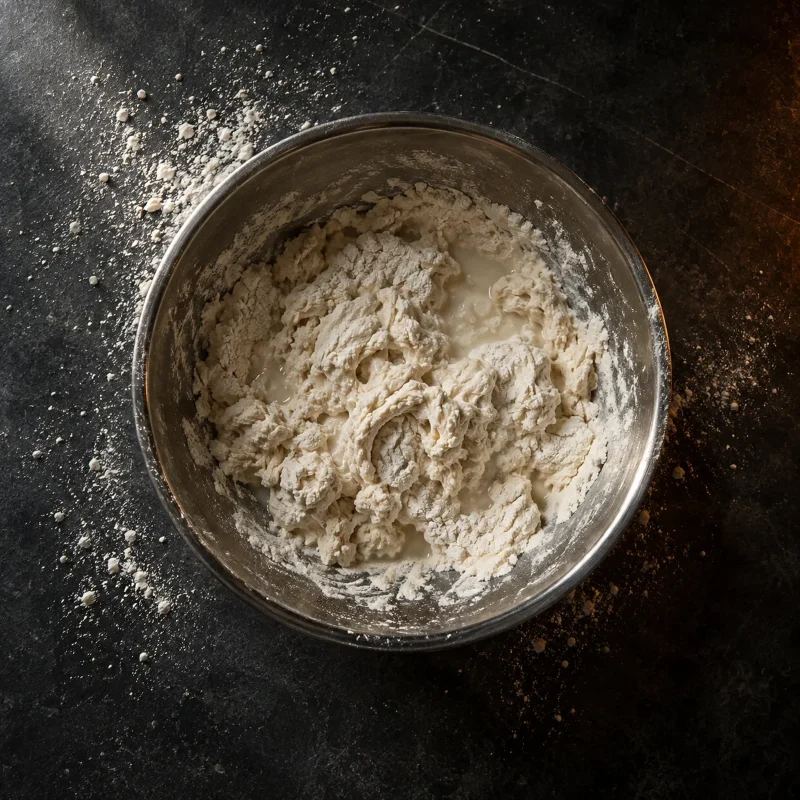
Water first. Then salt, then flour.

Dissolve the salt in the water before the flour goes in. That way it spreads evenly and you avoid grains of salt burning the yeast locally. The yeast goes in with the first tenth of the flour — never straight into the salt water.

Common mistakeWater that is too warm. Above 40 °C the yeast starts to suffer. Aim for 18–22 °C — kneading warms the dough enough.

0220–40 min

Let the flour drink in peace.

Flour and water form gluten all by themselves if they are left alone. Twenty minutes' rest halves the kneading time and gives a dough that stretches instead of tearing. Nothing here is mandatory — but it is the cheapest improvement there is.

0312–18 min

Knead until the windowpane holds.

Stretch a piece of dough between your fingers. If it turns translucent without tearing, the gluten is ready. The dough should be smooth, taut and come away from the sides of the bowl — not stick to them.

Common mistakeSprinkling on more flour because the dough is sticky. The stickiness disappears with kneading; the flour lowers the hydration for good.

042 h

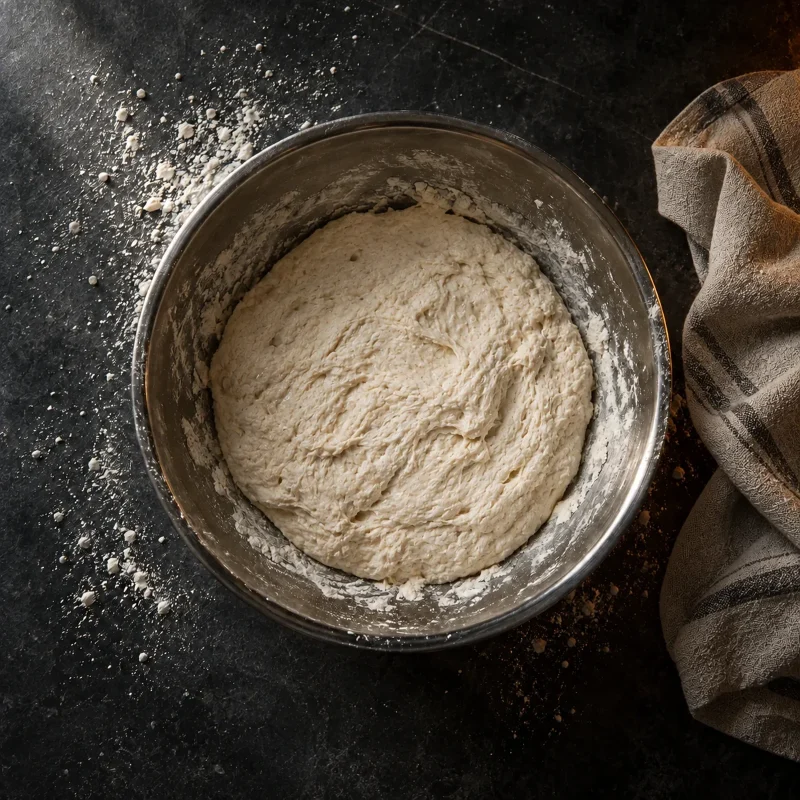
The whole dough proves as one lump.

Two hours at room temperature, covered. The yeast gets going, the gluten network relaxes and the dough starts to taste of something. It should get airier — not necessarily double in size.

0515 min

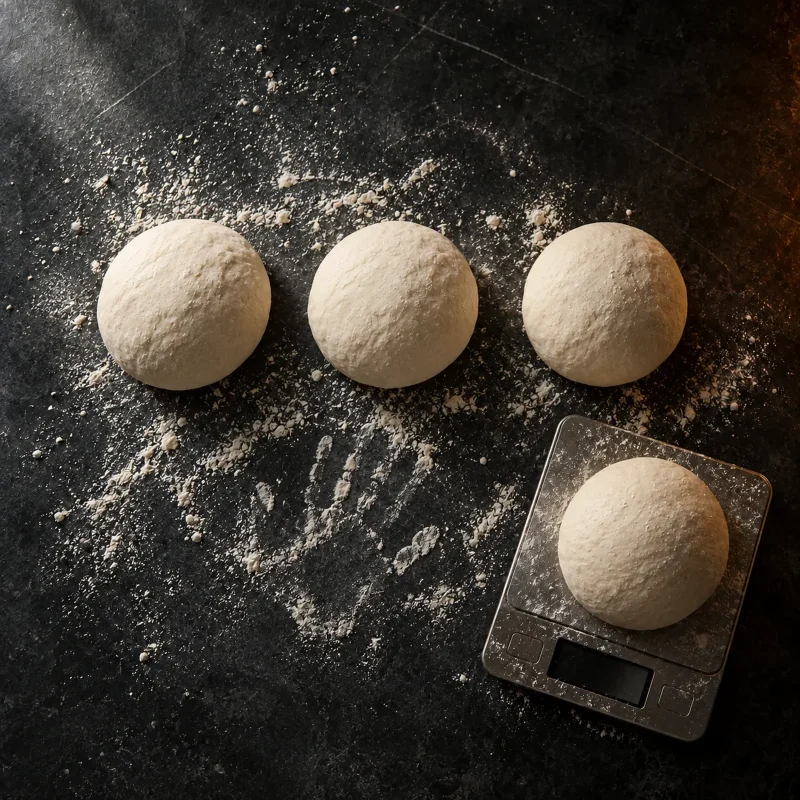
Weigh every ball. Your eye lies.

250 grams gives a pizza of about 30 centimetres. A twenty-gram difference shows straight away in the rim. Tighten the surface by tucking the edges under the ball — a smooth surface holds the gas better.

Common mistakeBalls shaped too loosely. They spread out in the box and are impossible to open into rounds.

0624–72 h

The fridge does the work. You do nothing.

At four degrees the yeast is idling while enzymes break starch down into sugar. That is why a cold-fermented dough gets deeper colour and more flavour. After 72 hours most everyday flours start to give up — the gluten goes too slack.

072 min

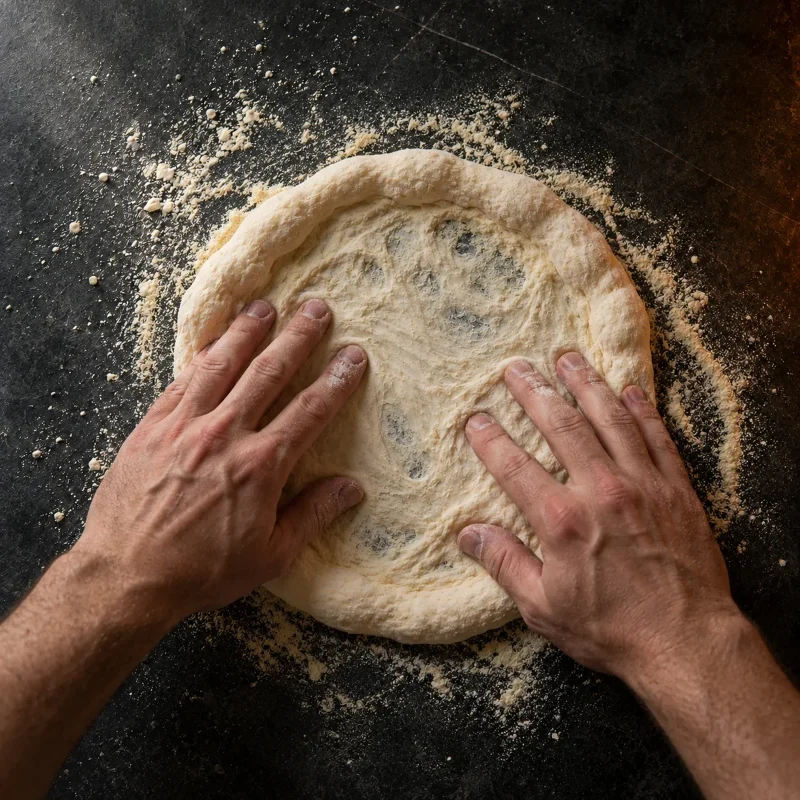
Press the gas towards the rim — not out of it.

Take the balls out 2–3 hours before baking so they come up to room temperature. Press from the centre outwards with your fingertips and leave two centimetres of rim completely untouched. That is where the gas should be when it meets the heat.

Common mistakeThe rolling pin. It presses out all the air and gives a flat, hard rim. Your hands are enough.

0860–90 s

Ninety seconds. Three turns.

In a wood-fired oven it is over before you have time to hesitate. In a regular oven at 250 degrees with a pizza steel and grill mode it takes 4–6 minutes — and the dough needs a little less water so it doesn't turn chewy. Exactly how much less is one of the things we are measuring.


04 · TestedSame dough · one variable at a time

Opine less. Measure more.

Every test uses the same base dough and changes a single thing. We publish the plan before the test is run and the full protocol – equipment, temperatures, times and photos – once the results are in, so you can repeat it at home.

Experiment 01 Planned

Frozen dough balls vs fresh – test plan

Can you freeze Neapolitan pizza dough without losing the rim? The plan for comparing frozen and fresh dough balls, and how they will be thawed.

Dough
the house method, one batch
Freezing
after 24 hours' cold fermentation, airtight, 1 and 3 weeks
Thawing
in the fridge overnight, then room temperature
Repeats
at least three balls per variant
Experiment 02 Planned

Mozzarella water content – a test plan for five cheeses

Which mozzarella makes a pizza wet? The test plan: five cheeses weighed before and after draining and baking, on the same dough and in the same oven.

Cheeses
supermarket mozzarella, fior di latte, mozzarella di bufala, grated pizza cheese and a low-moisture mozzarella
Preparation
with and without an hour's draining in the fridge
Amount
the same weight of cheese per pizza
Measured
weight loss from draining, liquid on the pizza after baking
Experiment 03 Planned

The grill setting in a home oven – does it help? Test plan

Switching on the grill for the last minute is common advice for pizza in a home oven. Our test plan: does it give a better top, and what happens to the base?

Variants
top and bottom heat throughout, plus grill for the last 1–2 minutes
Surface
baking steel, same shelf position
Oven
ordinary home oven, highest setting
Repeats
at least three pizzas per variant

06 · RecipesSame dough · different toppings

The classics, with gram weights.

Every recipe starts from the house dough. We give the grams of sauce and cheese to use — not "a handful".

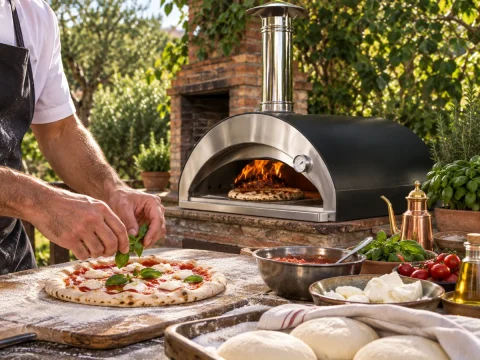
A pizzaiolo slides a pizza into a stainless steel outdoor oven at dusk.

08 · Ovens & equipmentGuides, not adverts

Ovens and equipment, without brochure language.

Heat-up time, recovery between pizzas and how the oven behaves on a cold evening – what actually matters in practice but rarely makes it into the brochure.